How to Scale Meta Ads ROAS Without Burning Budget
Scaling ad spend often causes returns to drop. Here's the audience and creative structure we use to scale spend profitably.
The biggest trap in performance marketing is horizontal budget increases on winning ad sets. You double the daily budget, performance falls off a cliff within 72 hours, and the blended ROAS turns negative.
Here is the systematic architecture we deploy to scale monthly spend 3x–5x while protecting profitability.
1. Separate Creative Testing from Scaling
Never test new creatives inside your core scaling campaigns. New ads require discovery budgets and clean data signals.
Create a dedicated Creative Sandbox campaign with Cost-Per-Result bidding. Once an asset proves a minimum 3.0x Return on Ad Spend over 50 conversions, graduate that creative into your main Scaling Campaign.
2. The 3-Part Relationship Architecture
Classify your campaigns strictly by customer relationship rather than broad catalogue groupings:
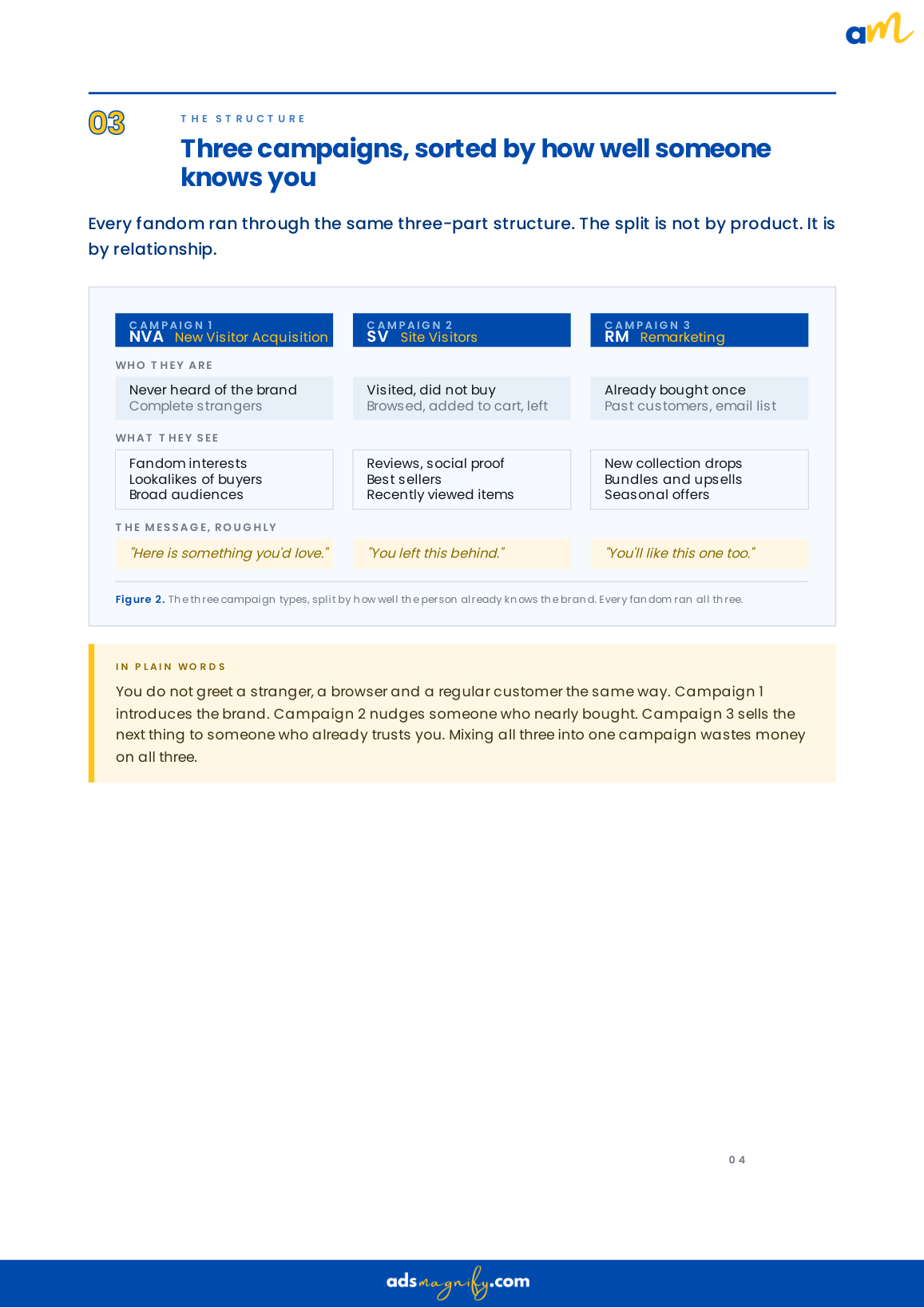
- New Visitor Acquisition (NVA): Targets cold audiences with emotional hooks and direct-response problem-solution angles.
- Site Visitors (SV): Engages users who added to cart or viewed specific product pages within 14 days, highlighting reviews, social proof, and unboxing clips.
- Past Customer Remarketing (RM): Drives repeat purchases through bundle promotions, loyalty incentives, and cross-sell recommendations.
3. Lookalike Expansion Ladder
Instead of relying on a generic 1% all-purchasers lookalike, construct a stepped lookalike ladder:
- 0–2% High-Value Buyers: Highest intent, seeded with top 20% LTV customers.
- 2–4% Product-Specific Lookalikes: Broader reach that still preserves thematic affinity.
- Broad Open Targeting: Run without demographic constraints once pixel conversion volume exceeds 500 orders per week.
Scaling is a function of system design, not aggressive budget toggling. Request a growth consultation to review your paid social infrastructure.